Tarot Card Reading
About Course
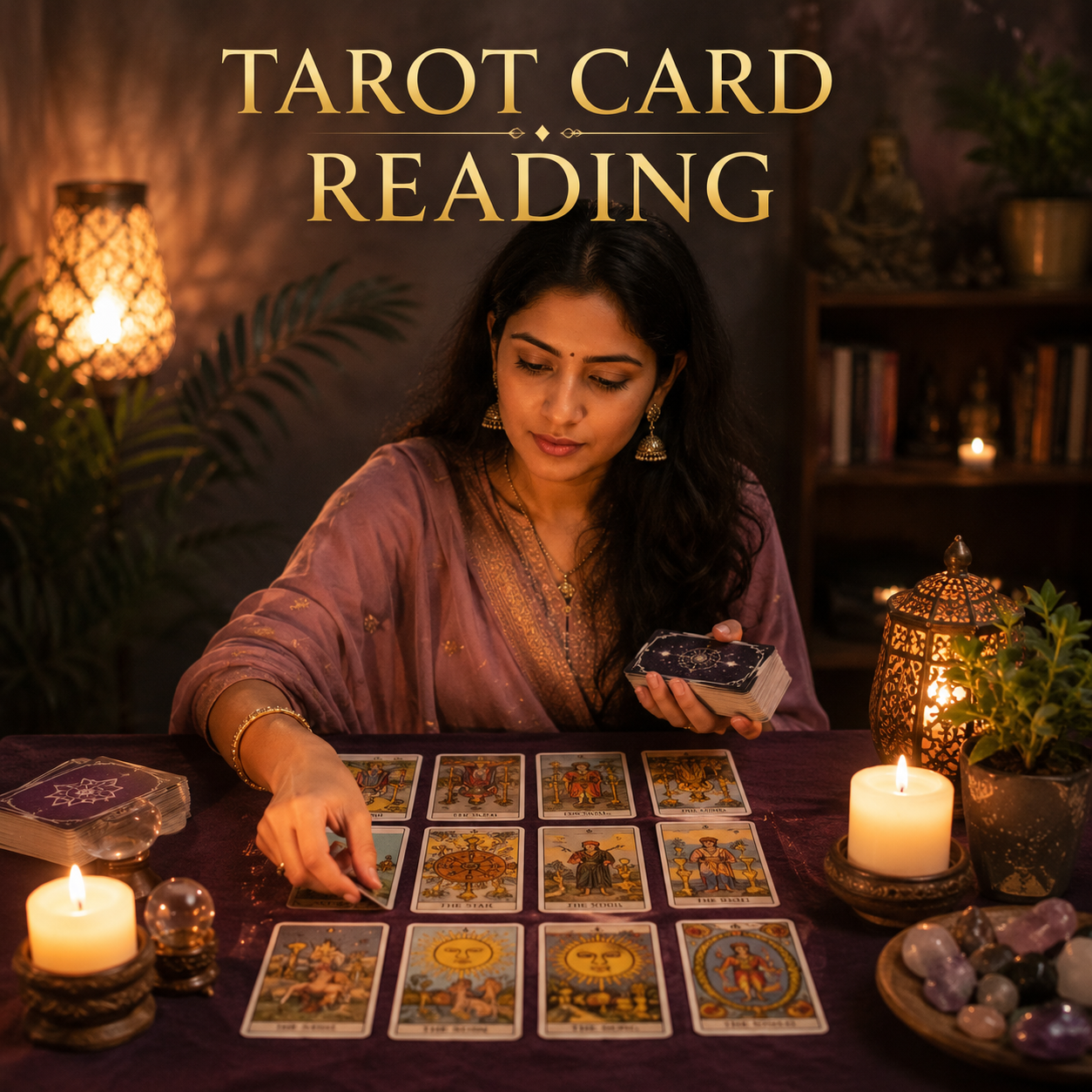
Tarot card reading is a practice that uses a deck of symbolic cards to explore questions, situations, emotions, or possible paths forward. It is often used for self-reflection, personal insight, storytelling, or spiritual guidance.
What Is a Tarot Deck?
A standard tarot deck contains 78 cards, divided into:
Major Arcana (22 cards)
These cards represent significant themes, life lessons, or transformative experiences. Examples include:
- The Fool
- The Magician
- The High Priestess
- The World
Minor Arcana (56 cards)
These cards focus on everyday experiences and are divided into four suits:
- Wands
- Cups
- Swords
- Pentacles
Each suit contains numbered cards and court cards (Page, Knight, Queen, and King).
How a Tarot Reading Works
A reader typically:
- Focuses on a question or topic.
- Shuffles the deck.
- Draws cards according to a chosen layout (spread).
- Interprets the symbolism, card positions, and relationships between the cards.
Common spreads include:
- One-card reading
- Three-card spread (past, present, future)
- Celtic Cross spread
Example Interpretation
If someone draws:
- The Star — often associated with hope, inspiration, or renewal.
- The Hermit — often associated with introspection and seeking wisdom.
- The Sun — often associated with clarity, success, and optimism.
A reader might interpret the combination as a journey from reflection toward renewed confidence and understanding.
Symbolic Nature
Tarot cards do not have universally agreed-upon meanings. Interpretations vary depending on:
- The reading tradition
- The specific deck
- The reader’s approach
- The context of the question
Scientific Perspective
There is no scientific evidence that tarot cards can predict the future or reveal hidden facts through supernatural means. Many people use tarot as:
- A tool for self-reflection
- A way to examine different perspectives
- A creative or spiritual practice
- A framework for discussing personal challenges and goals
Student Ratings & Reviews