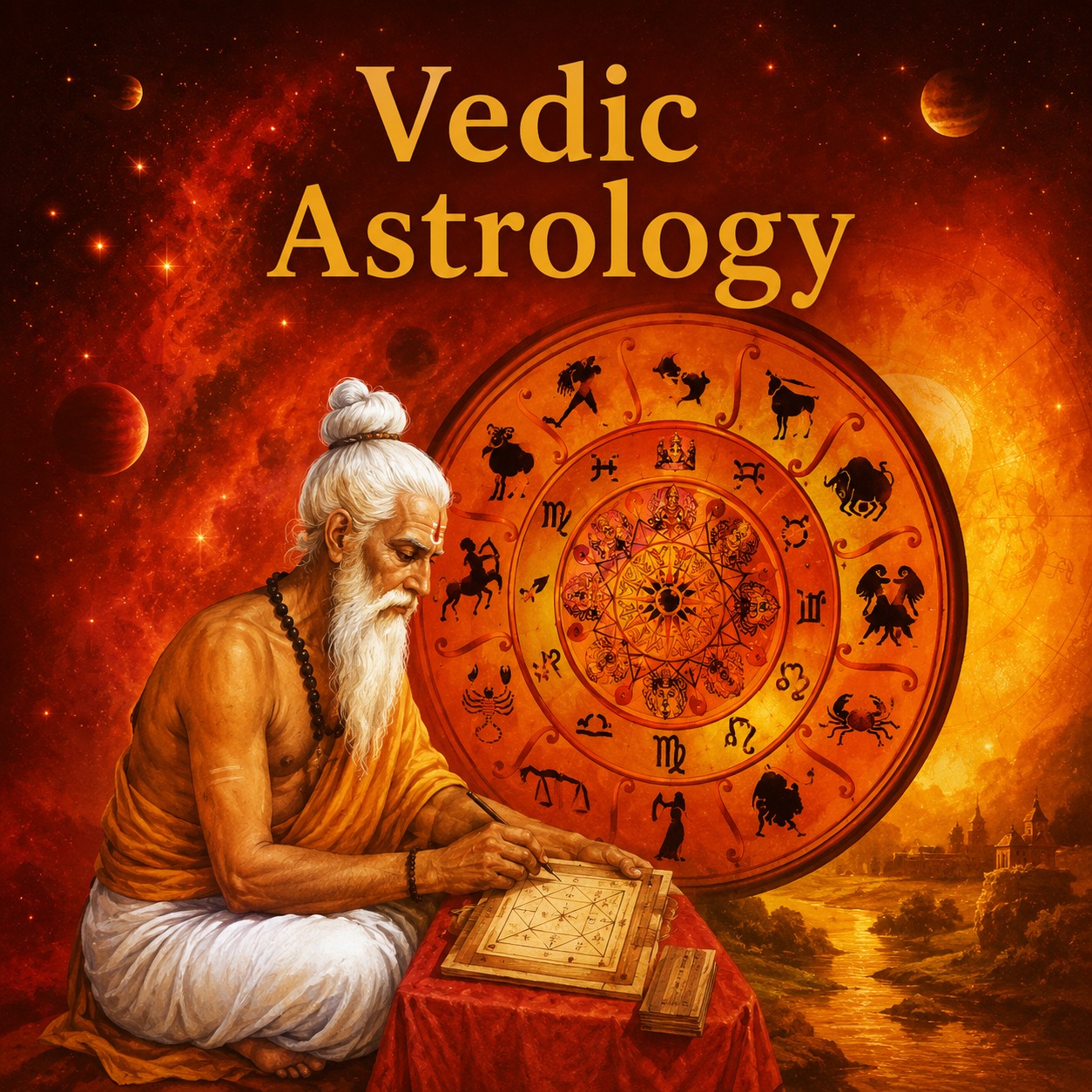
Vedic astrology studies the positions and movements of celestial bodies at the time of a person’s birth and interprets how they may influence life events, personality, relationships, career, and spiritual development.
Key components include:
Birth Chart (Kundli or Janma Kundali): A map of the sky at the exact time and place of birth.
Twelve Houses (Bhavas): Represent different areas of life such as career, family, health, wealth, and relationships.
Twelve Zodiac Signs (Rashis): Aries (Mesha), Taurus (Vrishabha), Gemini (Mithuna), and so on.
Nine Planets (Navagrahas): Sun, Moon, Mars, Mercury, Jupiter, Venus, Saturn, and the lunar nodes Rahu and Ketu.
Nakshatras: Twenty-seven lunar constellations that provide additional detail beyond zodiac signs.
Sidereal Zodiac
Unlike most Western astrology, which typically uses the tropical zodiac, Vedic astrology generally uses the sidereal zodiac, which is based on the observed positions of constellations. As a result, a person’s Vedic zodiac sign may differ from their Western zodiac sign.
Predictive Techniques
Vedic astrologers commonly use:
Dasha systems, especially the Vimshottari Dasha, to estimate periods of life influenced by different planets.
Planetary transits (Gochar) to analyze current influences.
Divisional charts (Vargas) for detailed examination of specific life areas.
Common Areas of Consultation
People often consult Vedic astrology regarding:
Career and finances
Marriage and relationships
Education
Health
Business decisions
Spiritual growth
Cultural and Scientific Perspective
Vedic astrology has significant cultural and historical importance in India and continues to be widely practiced. However, the scientific community does not consider astrology a scientific discipline because its claims have not been reliably supported by empirical evidence. Many people nevertheless value it as a spiritual, symbolic, or traditional framework for understanding life and making personal reflections.
If you’d like, I can also explain specific concepts such as Nakshatras, Rahu and Ketu, Dashas, or how a Kundli is interpreted.